what to do if significant other is rejected from medical school

Rejection can be defined equally the act of pushing someone or something away. One may feel rejection from one's family of origin, a friend, or a romantic partner, and the resulting emotions can frequently be painful.
Rejection can be experienced on a large scale or in small ways in everyday life. While rejection is typically a part of life, some types of rejection may be more hard to cope with than others.
A therapist or other mental wellness professional may be able to help an individual work through and cope with rejection and the distress that can result.
- Understanding Rejection
- Fearfulness of Rejection
- Psychological Effects of Rejection
- Types of Rejection
- Romantic Rejection and the 'Friend Zone'
Understanding Rejection
Rejection can occur in a multifariousness of circumstances. Typically, rejection describes an example of a person or entity pushing something or someone away or out. A person may reject, or refuse to accept, a souvenir, for example.
In the field of mental health care, rejection most frequently refers to the feelings of shame, sadness, or grief people feel when they are not accepted by others. A person might experience rejected subsequently a significant other ends a human relationship. A kid who has few or no friends may feel rejected by peers. An private who was given up for adoption may also experience feelings of rejection.
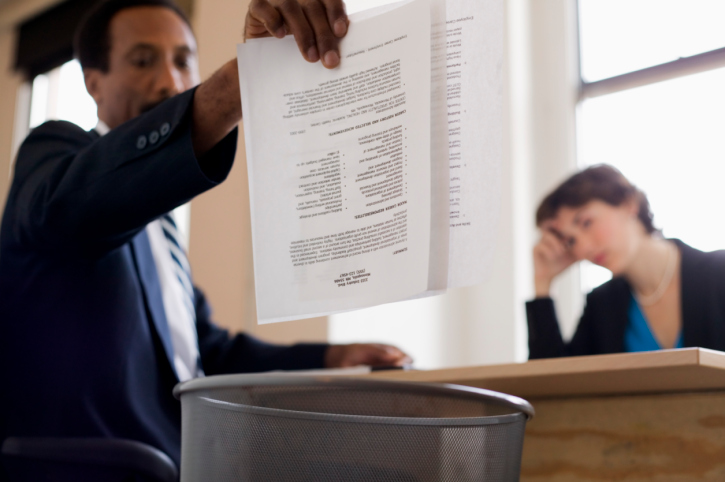
Rejection can too effect from life events not involving relationships, such as being turned down for a desired position at piece of work or receiving a rejection letter from a higher. While any rejection can exist painful, some instances of rejection may be more impactful than others. Because virtually humans want social contact, and many people crave acceptance from guild, existence rejected can incite negative feelings and emotions.
Fear of Rejection
The feeling of rejection is believed to have developed as an evolutionary tool to warning early humans who were at gamble of being ostracized from the tribe they belonged to. A painful rejection from others in the tribe was likely to encourage an individual to modify any problematic behavior in order to avoid further rejection, or ostracism, from the tribe. Those who were able to avoid further rejection were more likely to survive, while those who did non find rejection to exist particularly painful may not accept corrected the offending behavior, making them less likely to survive. In this manner, humans may take evolved to feel rejection as painful.
Today, many people isolate themselves or concord back from connecting to others because they're afraid of being rejected. Fearfulness of or sensitivity to rejection that causes someone to pull away from others tin atomic number 82 to chronic feelings of loneliness and depression. While rejection sensitivity can co-occur with many mental health issues including social anxiety, avoidant personality, and borderline personality, it is not an official diagnosis.
Rejection sensitivity is common in many people with attention-deficit hyperactivity disorder (ADHD). Fear of rejection may occur so regularly in individuals with ADHD that some refer to it as rejection sensitive dysphoria. Some common signs of rejection sensitive dysphoria in those with ADHD include cocky-criticism, feet in social situations, and farthermost sadness later a perceived rejection.
Psychological Effects of Rejection
Rejection tin can be extremely painful considering it may have the effect of making people feel every bit if they are non wanted, valued, or accustomed. About individuals will feel rejection at some point in their lives. A child may feel rejected temporarily by a busy parent, or a student may feel rejected by a professor who is brusque or rude. These types of rejection may resolve quickly and are less likely to have long-lasting effects.
Ongoing or long-term rejection may have deep and lasting psychological effects which may include:
- Trauma: Long-term rejection or rejection that results in extreme feelings may contribute to trauma and can have serious psychological consequences. For instance, children who feel consistently rejected past their parents may discover it difficult to succeed at school and in relationships with their peers. Some individuals develop a chronic fear of rejection, often equally a issue of multiple traumatic experiences with rejection early in life.
- Depression: Rejection has been linked to the evolution of depression in teen girls; however, others who experience rejection may also get depressed. Further, bullying, which is essentially a combination of ostracism and rejection, tin can have numerous negative effects, including depression, stress, eating disorders, and self-harming behaviors.
- Hurting response: Research has shown that the brain responds to social hurting in a way that is like to the way that it responds to physical pain. Co-ordinate to research, the same brain pathways that are activated by physical hurting are also activated past social pain, or rejection. Receptor systems in the brain besides release natural painkillers (opioids) when an individual experiences social pain, the same every bit when physical pain is experienced.
- Anxiety and stress: Rejection might often contribute to pre-existing weather such equally stress and anxiety or pb to their evolution. Similarly, these and other mental wellness conditions can exacerbate feelings of rejection.
- Abuse: 1 written report found that, in the male members of the written report, the perpetration of abuse in intimate relationships was associated with the feel of college levels of parental rejection in childhood. Symptoms of posttraumatic stress and deficits in social data processing were also linked.
While rejection can hurt, it's never healthy to have the pain of rejection out on another person through emotional abuse or physical violence. One study constitute, for instance, that perceived rejection may contribute to violence or aggression against that group.
A compassionate therapist tin can assistance individuals who feel rejected acquire to bargain with perceived or real rejection and build social skills that may assistance them connect more than hands with others.
Types of Rejection
Rejection occurs in a variety of contexts, and any mental health implications by depend partly on the circumstances under which the rejection occurred. Some common types of rejection include:
- Familial rejection: Rejection from one'due south family unit of origin, typically parental rejection, may consist of corruption, abandonment, fail, or the withholding of love and amore. This grade of rejection is probable to touch on an individual throughout life, and it may have serious consequences.
- Social rejection: This type of rejection may occur at any historic period and can often brainstorm in childhood. Social rejection tin include bullying and alienation in school or the workplace, just it can also extend to whatever social group. Those who challenge the condition quo or who live what is considered "outside the norm" for their society may exist more prone to social rejection.
- Rejection in a relationship: People may feel rejection while dating or in a relationship. For instance, an private may decline to share an issue or experience with a partner, withhold affection or intimacy, or treat a partner as if that person were no more than a casual acquaintance. When an private decides to stop a relationship, this tin can also cause the other partner to experience rejected.
- Romantic rejection: Rejection can occur when a person asks for a appointment and is denied. While this may likewise be known as sexual rejection, the person who is romantically rejected may non always be interested in a sexual relationship.
All forms of rejection tin hurt, and when the rejecting is done by a trusted loved i, it can deeply bear upon self-worth and cocky-confidence. While therapy tin can help people overcome wounds that may be caused when a person is rejected by a loved 1, it can likewise assistance individuals learn to accept types of rejection that occur in twenty-four hour period-to-day life, such equally rejection by a potential romantic partner, being turned down during a chore search, or while applying to higher.
Romantic Rejection and the 'Friend Zone'
Romantic rejection can be peculiarly challenging, especially to individuals who desire a lasting romantic human relationship. A breakup, or rejection from a romantic partner, tin atomic number 82 to feelings of grief that may be overwhelming and can concluding for weeks, months, or fifty-fifty years. Rejection in a romantic relationship might modify the way one views one's life and one's own cocky long after the breakup has occurred.
In contempo years, the concept of the "friend zone" has been popularized. A person who describes themselves every bit beingness "put in the friend zone" is typically proverb that romantic advances made toward the object of that person'southward affection were refused. This generally occurs in one of 2 circumstances:
- A person has developed romantic feelings for a friend over time.
- One attempts to date or otherwise seek intimacy with an private who does not wish to pursue anything other than friendship.
The concept of the friend zone is considered by many to be problematic. Although anyone may employ the term "being friend zoned" to describe an example of being rejected, the term is about often applied to and past men who have been turned down by women.
While many individuals may be able to readily accept that the person they are attracted to does not accept the aforementioned feelings, others may feel disgruntled or angry. Some may believe that considering they take been nice to an individual, they deserve a chance to appointment and win the affection of that person. Some may also believe that remaining friends with a person one is sexually attracted to will give that person the take a chance to realize romantic feelings toward the other individual and develop the desire to pursue a romantic relationship with them.
These ideas can perpetuate the notions that romantic love is superior to friendship, that individuals (typically men and women) cannot remain friends without desiring sexual contact, and that all individuals desire sexual contact (eliminating the experiences of those who are aromantic or aseuxal).
This concept is non always used in reference to a man and a woman. When it is used in such a way, information technology can take the effect of furthering the belief that when a woman turns a human down, she may not really mean it or may requite a different answer in the future, thus implying that women, or any individual who rejects another, cannot exist responsible for their own attractions or dating preferences and may not know what they want. The "friend zone" can as well be said to contribute to heterosexist behavior, as another basis for the concept is the assumption that individuals are heterosexual unless they land otherwise, or that heterosexuality is the "normal" sexual orientation.
Using the term friend zone is not necessarily harmful. A person who jokingly states, "I was put in the friend zone once again," may be able to accept this and move on easily. However, the concept is considered by many to be grounded in ideas that tin be harmful. Thus, it may exist helpful to find a different style to describe a situation where one has been rejected, and those who experience difficulty coping with rejection may find help and support in therapy.
References:
- Dickson, Due east. J. (2013, October 12). 6 reasons the "friend zone" needs to die. Retrieved from http://www.salon.com/2013/10/12/6_reasons_the_friend_zone_needs_to_die
- Dodson, W. (due north.d.). [Self-test] Could you take rejection sensitive dysphoria? Retrieved from https://www.additudemag.com/rejection-sensitive-dysphoria-adhd-symptom-test
- Gaertner, L., Luzzini, J., & O'Mara, Eastward. M. (2008). When rejection by one fosters aggression against many: Multiple-victim assailment as a consequence of social rejection and perceived groupness. Journal of Experimental Social Psychology, 44(four), 958-970. doi: ten.1016/j.jesp.2008.02.004
- Leary, One thousand. R. (2015). Emotional responses to interpersonal rejection. Dialogues in Clinical Neuroscience, 17(four), 435-441. Retrieved from https://www.ncbi.nlm.nih.gov/pmc/articles/PMC4734881
- Lieberman, M. D. (2013, October 11). Ouch! In the brain, social rejection feels similar physical pain. Retrieved from http://blogs.discovermagazine.com/crux/2013/10/11/ouch-in-the-brain-social-rejection-feels-like-physical-pain/#.VeduRflViko
- Paul, P. (2011, May 13). Rejection may hurt more than feelings. Retrieved from http://www.nytimes.com/2011/05/15/fashion/is-rejection-painful-really-it-is-studied.html?_r=1
- Rejection. (n.d.). Merriam-Webster. Retrieved from http://world wide web.merriam-webster.com/dictionary/rejection
- Taft, C., Schumm, J., Marshall, A., Panuzio, J., & Holtzworth-Munroe, A. (2008). Family-of-origin maltreatment, posttraumatic stress disorder symptoms, social data processing deficits, and relationship abuse perpetration. Journal of Aberrant Psychology, 117(3), 637-646. doi: 10.1037/0021-843X.117.three.637
- Weir, K. (2012). The pain of social rejection. Monitor on Psychology, 43(four), 50. Retrieved from http://world wide web.apa.org/monitor/2012/04/rejection.aspx
Source: https://www.goodtherapy.org/learn-about-therapy/issues/rejection
0 Response to "what to do if significant other is rejected from medical school"
Post a Comment