what is the best way to characterize the attachment patterns of very young infants such as colin?
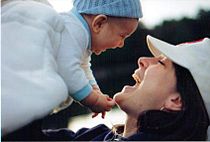
Attachment in children is "a biological instinct in which proximity to an attachment figure is sought when the child senses or perceives threat or discomfort. Attachment behaviour anticipates a response by the attachment figure which volition remove threat or discomfort".[1] [two] [iii] Zipper also describes the function of availability, which is the degree to which the authoritative effigy is responsive to the child's needs and shares advice with them. Childhood zipper tin define characteristics that will shape the child's sense of cocky, their forms of emotion-regulation, and how they carry out relationships with others.[4] Attachment is found in all mammals to some caste, especially primates.
Attachment theory has led to a new agreement of kid development. Children develop different patterns of attachment based on experiences and interactions with their caregivers at a young historic period. Four different attachment classifications have been identified in children: secure attachment, anxious-ambivalent attachment, anxious-avoidant attachment, and disorganized attachment. Attachment theory has become the dominant theory used today in the study of infant and toddler beliefs and in the fields of babe mental health, treatment of children, and related fields.
Zipper theory and children [edit]
Zipper theory (Bowlby 1969, 1973, 1980) is rooted in the ethological notion that a newborn child is biologically programmed to seek proximity with caregivers, and this proximity-seeking behavior is naturally selected.[v] [6] [7] Through repeated attempts to seek physical and emotional closeness with a caregiver and the responses the child gets, the child develops an internal working model (IWM) that reflects the response of the caregiver to the child. According to Bowlby, attachment provides a secure base from which the kid tin explore the surround, a haven of safety to which the child can return when he or she is agape or fearful. Bowlby'due south colleague Mary Ainsworth identified that an important cistron which determines whether a child will have a secure or insecure attachment is the degree of sensitivity shown past their caregiver:
The sensitive caregiver responds socially to attempts to initiate social interaction, playfully to his attempts to initiate play. She picks him up when he seems to wish it, and puts him downwardly when he wants to explore. When he is distressed, she knows what kinds and caste of soothing he requires to condolement him – and she knows that sometimes a few words or a distraction will be all that is needed. On the other paw, the female parent who responds inappropriately tries to socialize with the baby when he is hungry, play with him when he is tired, or feed him when he is trying to initiate social interaction.[8]
However, it should be recognized that "fifty-fifty sensitive caregivers go it right simply well-nigh 50 percent of the time. Their communications are either out of synch, or mismatched. At that place are times when parents experience tired or distracted. The telephone rings or at that place is breakfast to prepare. In other words, attuned interactions rupture quite oftentimes. But the hallmark of a sensitive caregiver is that the ruptures are managed and repaired."[9]
Attachment nomenclature in children: the Strange Situation Protocol [edit]

The almost mutual and empirically supported method for assessing zipper in infants (12 months – 20 months) is the Strange Situation Protocol, developed by Mary Ainsworth equally a effect of her careful in-depth observations of infants with their mothers in Republic of uganda(see below).[11] The Foreign State of affairs Protocol is a research, not a diagnostic, tool and the resulting attachment classifications are not 'clinical diagnoses.' While the procedure may be used to supplement clinical impressions, the resulting classifications should not be dislocated with the clinically diagnosed 'Reactive Attachment Disorder (RAD).' The clinical concept of RAD differs in a number of central means from the theory and enquiry driven attachment classifications based on the Strange State of affairs Procedure. The idea that insecure attachments are synonymous with RAD is, in fact, non accurate and leads to ambivalence when formally discussing attachment theory equally it has evolved in the research literature. This is not to suggest that the concept of RAD is without merit, but rather that the clinical and research conceptualizations of insecure attachment and zipper disorder are not synonymous.
The 'Strange Situation' is a laboratory procedure used to assess baby patterns of attachment to their caregiver. In the process, the mother and infant are placed in an unfamiliar playroom equipped with toys while a researcher observes/records the procedure through a one-way mirror. The procedure consists of eight sequential episodes in which the child experiences both separation from and reunion with the mother as well as the presence of an unfamiliar stranger.[11] The protocol is conducted in the following format unless modifications are otherwise noted by a particular researcher:
- Episode 1: Mother (or other familiar caregiver), Baby, Experimenter (30 seconds)
- Episode ii: Mother, Babe (three mins)
- Episode 3: Mother, Baby, Stranger (3 mins or less)
- Episode 4: Stranger, Baby (3 mins)
- Episode v: Mother, Baby (three mins)
- Episode 6: Baby Alone (3 mins or less)
- Episode vii: Stranger, Infant (3 mins or less)
- Episode 8: Female parent, Baby (3 mins)
Mainly on the basis of their reunion behaviours (although other behaviours are taken into account) in the Strange Situation Paradigm (Ainsworth et al., 1978; see beneath), infants tin be categorized into three 'organized' zipper categories: Secure (Group B); Avoidant (Grouping A); and Broken-hearted/Resistant (Group C). There are subclassifications for each group (see below). A fourth category, termed Disorganized (D), can also be assigned to an infant assessed in the Foreign Situation although a primary 'organized' classification is always given for an infant judged to be disorganized. Each of these groups reflects a different kind of attachment human relationship with the mother. A child may accept a different type of attachment to each parent as well equally to unrelated caregivers. Attachment style is thus not then much a role of the kid'southward thinking, but is characteristic of a specific human relationship. However, after nigh age five the child exhibits one primary consistent pattern of attachment in relationships.[12]
The pattern the child develops after historic period five demonstrates the specific parenting styles used during the developmental stages within the child. These attachment patterns are associated with behavioural patterns and can help further predict a child's futurity personality.[13]
Attachment patterns [edit]
"The strength of a child'southward attachment behaviour in a given circumstance does not indicate the 'strength' of the attachment bond. Some insecure children will routinely brandish very pronounced attachment behaviours, while many secure children discover that there is no great need to engage in either intense or frequent shows of attachment behaviour".[xiv]
Secure zipper [edit]
A toddler who is securely attached to its parent (or other familiar caregiver) will explore freely while the caregiver is present, typically engages with strangers, is oftentimes visibly upset when the caregiver departs, and is generally happy to see the caregiver return. The extent of exploration and of distress are affected past the child'due south temperamental brand-upward and past situational factors likewise as by attachment status, notwithstanding. A kid's attachment is largely influenced by their master caregiver's sensitivity to their needs. Parents who consistently (or almost always) respond to their kid's needs will create deeply attached children. Such children are sure that their parents volition be responsive to their needs and communications.[xv]
In the traditional Ainsworth et al. (1978) coding of the Strange Situation, secure infants are denoted as "Group B" infants and they are further subclassified every bit B1, B2, B3, and B4.[eleven] Although these subgroupings refer to different stylistic responses to the comings and goings of the caregiver, they were not given specific labels by Ainsworth and colleagues, although their descriptive behaviours led others (including students of Ainsworth) to devise a relatively 'loose' terminology for these subgroups. B1'southward have been referred to as 'secure-reserved', B2's as 'secure-inhibited', B3's as 'secure-balanced,' and B4'southward as 'secure-reactive.' In academic publications however, the classification of infants (if subgroups are denoted) is typically just "B1" or "B2" although more than theoretical and review-oriented papers surrounding attachment theory may use the above terminology.
Deeply attached children are best able to explore when they have the knowledge of a secure base of operations to render to in times of need. When assistance is given, this bolsters the sense of security and too, bold the parent's assistance is helpful, educates the child in how to cope with the same trouble in the future. Therefore, secure attachment can be seen as the almost adaptive attachment fashion. According to some psychological researchers, a child becomes deeply fastened when the parent is available and able to encounter the needs of the kid in a responsive and advisable manner. At infancy and early on babyhood, if parents are caring and circumspect towards their children, those children will exist more prone to secure attachment.[16]
Anxious-resistant insecure attachment [edit]
Anxious-resistant insecure attachment is also called ambivalent attachment.[eleven] In general, a child with an anxious-resistant attachment style volition typically explore footling (in the Foreign Situation) and is often wary of strangers, even when the caregiver is present. When the caregiver departs, the child is often highly distressed. The kid is generally clashing when they return.[eleven] The Broken-hearted-Clashing/Resistant strategy is a response to unpredictably responsive caregiving, and that the displays of anger or helplessness towards the caregiver on reunion can be regarded as a conditional strategy for maintaining the availability of the caregiver by preemptively taking command of the interaction.[17] [18]
The C1 subtype is coded when:
"...resistant behavior is specially conspicuous. The mixture of seeking and even so resisting contact and interaction has an unmistakably angry quality and indeed an angry tone may characterize behavior in the preseparation episodes..." [11]
The C2 subtype is coded when:
"Perhaps the most conspicuous characteristic of C2 infants is their passivity. Their exploratory behavior is limited throughout the SS and their interactive behaviors are relatively lacking in active initiation. All the same, in the reunion episodes they obviously want proximity to and contact with their mothers, even though they tend to use signalling rather than active approach, and protest against existence put down rather than actively resisting release...In full general the C2 baby is not every bit conspicuously angry as the C1 baby." [eleven]
Anxious-avoidant insecure attachment [edit]
A child with the broken-hearted-avoidant insecure zipper style will avoid or ignore the caregiver – showing little emotion when the caregiver departs or returns. The kid will non explore very much regardless of who is there. Infants classified equally anxious-avoidant (A) represented a puzzle in the early 1970s. They did not showroom distress on separation, and either ignored the caregiver on their return (A1 subtype) or showed some trend to arroyo together with some tendency to ignore or turn away from the caregiver (A2 subtype). Ainsworth and Bong theorised that the patently unruffled behaviour of the avoidant infants is in fact as a mask for distress, a hypothesis later evidenced through studies of the heart-rate of avoidant infants.[19] [20]
Infants are depicted as anxious-avoidant insecure when there is:
"...conspicuous abstention of the mother in the reunion episodes which is likely to consist of ignoring her altogether, although in that location may be some pointed looking away, turning abroad, or moving away...If at that place is a greeting when the mother enters, information technology tends to exist a mere wait or a smile...Either the infant does not arroyo his female parent upon reunion, or they approach in 'bootless' fashions with the baby going past the mother, or it tends to just occur after much coaxing...If picked up, the baby shows picayune or no contact-maintaining behavior; he tends not to cuddle in; he looks away and he may squirm to get downward." [eleven]
Ainsworth's narrative records showed that infants avoided the caregiver in the stressful Strange Situation Procedure when they had a history of experiencing brushoff of attachment behaviour. The child'due south needs are frequently not met and the child comes to believe that communication of needs has no influence on the caregiver. Ainsworth's student Mary Main theorised that avoidant behaviour in the Foreign Situational Process should be regarded every bit 'a conditional strategy, which paradoxically permits whatever proximity is possible nether conditions of maternal rejection' past de-emphasising zipper needs.[21] Principal proposed that avoidance has 2 functions for an baby whose caregiver is consistently unresponsive to their needs. Firstly, avoidant behaviour allows the infant to maintain a provisional proximity with the caregiver: close enough to maintain protection, only afar plenty to avert rebuff. Secondly, the cognitive processes organising avoidant behaviour could help direct attention abroad from the unfulfilled desire for closeness with the caregiver – avoiding a situation in which the child is overwhelmed with emotion ('disorganised distress'), and therefore unable to maintain control of themselves and accomplish even conditional proximity.[22]
Disorganized/disoriented attachment [edit]
Ainsworth herself was the first to find difficulties in plumbing fixtures all infant behaviour into the three classifications used in her Baltimore study. Ainsworth and colleagues sometimes observed 'tense movements such every bit hunching the shoulders, putting the easily behind the neck and tensely cocking the head, and so on. It was our articulate impression that such tension movements signified stress, both because they tended to occur chiefly in the separation episodes and because they tended to exist prodromal to crying. Indeed, our hypothesis is that they occur when a child is attempting to control crying, for they tend to vanish if and when crying breaks through'.[23] Such observations also appeared in the doctoral theses of Ainsworth'south students. Crittenden, for case, noted that i abused infant in her doctoral sample was classed as secure (B) by her undergraduate coders because her strange situation behaviour was "without either abstention or ambiguity, she did show stress-related stereotypic headcocking throughout the strange situation. This pervasive behaviour, all the same, was the just clue to the extent of her stress".[24]
Drawing on records of behaviours discrepant with the A, B, and C classifications, a fourth classification was added by Ainsworth'southward colleague Mary Chief.[25] In the Strange State of affairs, the attachment organisation is expected to exist activated by the departure and render of the caregiver. If the behaviour of the baby does not appear to the observer to be coordinated in a smoothen fashion across episodes to accomplish either proximity or some relative proximity with the caregiver, and so it is considered 'disorganised' as information technology indicates a disruption or flooding of the zipper organization (e.g. by fear). Babe behaviours in the Strange Situation Protocol coded as disorganised/disoriented include overt displays of fright; contradictory behaviours or affects occurring simultaneously or sequentially; stereotypic, asymmetric, misdirected or jerky movements; or freezing and apparent dissociation. Lyons-Ruth has urged, nevertheless, that information technology should be wider 'recognized that 52% of disorganized infants go on to arroyo the caregiver, seek comfort, and cease their distress without articulate ambivalent or avoidant behavior.'[26]
There is 'apace growing interest in disorganized attachment' from clinicians and policy-makers as well as researchers.[27] Yet the Disorganized/disoriented zipper (D) nomenclature has been criticised by some for existence as well encompassing.[28] In 1990, Ainsworth put in print her approval for the new 'D' nomenclature, though she urged that the addition exist regarded as 'open-ended, in the sense that subcategories may exist distinguished', equally she worried that the D classification might be also encompassing and might treat too many different forms of behaviour every bit if they were the aforementioned thing.[29] Indeed, the D nomenclature puts together infants who utilise a somewhat disrupted secure (B) strategy with those who seem hopeless and testify picayune attachment behaviour; it also puts together infants who run to hide when they see their caregiver in the same classification as those who show an avoidant (A) strategy on the first reunion and then an ambivalent-resistant (C) strategy on the 2nd reunion. Perhaps responding to such concerns, George and Solomon have divided among indices of Disorganized/disoriented zipper (D) in the Foreign Situation, treating some of the behaviours as a 'strategy of agony' and others equally testify that the attachment system has been flooded (east.k. by fear, or anger).[30] Crittenden also argues that some behaviour classified as Disorganized/disoriented can be regarded as more 'emergency' versions of the avoidant and/or ambivalent/resistant strategies, and role to maintain the protective availability of the caregiver to some degree. Sroufe et al. accept agreed that 'even disorganised attachment behaviour (simultaneous approach-avoidance; freezing, etc.) enables a degree of proximity in the confront of a frightening or unfathomable parent'.[31] However, 'the presumption that many indices of "disorganisation" are aspects of organised patterns does not forbid acceptance of the notion of disorganisation, especially in cases where the complication and dangerousness of the threat are beyond children'due south chapters for response'.[32] For example, 'Children placed in care, especially more than than once, frequently have intrusions. In videos of the Foreign Situation Procedure, they tend to occur when a rejected/neglected child approaches the stranger in an intrusion of desire for condolement, then loses muscular control and falls to the flooring, overwhelmed past the intruding fear of the unknown, potentially dangerous, strange person'.[33]
Main and Hesse[34] institute that most of the mothers of these children had suffered major losses or other trauma shortly before or after the birth of the infant and had reacted by condign severely depressed.[35] In fact, 56% of mothers who had lost a parent past expiry before they completed high school afterward had children with disorganized attachments.[34] Later on, studies, whilst emphasising the potential importance of unresolved loss, take qualified these findings.[36] For case, Solomon and George plant that unresolved loss in the mother tended to exist associated with disorganised attachment in their baby primarily when they had also experienced an unresolved trauma in their life prior to the loss.[37]
Later patterns and the dynamic-maturational model [edit]
Studies of older children take identified further attachment classifications. Main and Cassidy observed that disorganized behaviour in infancy can develop into a kid using caregiving-decision-making or punitive behaviour in order to manage a helpless or dangerously unpredictable caregiver. In these cases, the child's behaviour is organised, merely the behaviour is treated by researchers as a form of 'disorganization' (D) since the bureaucracy in the family is no longer organised according to parenting authority.[38]
Patricia McKinsey Crittenden has elaborated classifications of further forms of avoidant and clashing zipper behaviour. These include the caregiving and punitive behaviours too identified by Main and Cassidy (termed A3 and C3 respectively), but likewise other patterns such as compulsive compliance with the wishes of a threatening parent (A4).[39]
Crittenden's ideas developed from Bowlby'southward proposal that 'given certain adverse circumstances during childhood, the selective exclusion of information of certain sorts may be adaptive. Notwithstanding, when during adolescence and adult the situation changes, the persistent exclusion of the same forms of information may become maladaptive'.[40]
Crittenden proposed that the basic components of human feel of danger are ii kinds of information:[41]
- 'Affective information' – the emotions provoked by the potential for danger, such every bit acrimony or fear. Crittenden terms this 'affective information'. In childhood this information would include emotions provoked by the unexplained absence of an zipper effigy. Where an infant is faced with insensitive or rejecting parenting, ane strategy for maintaining the availability of their attachment figure is to try to exclude from consciousness or from expressed behaviour any emotional information that might upshot in rejection.
- Causal or other sequentially ordered knowledge about the potential for safety or danger. In childhood this would include knowledge regarding the behaviours that indicate an zipper figure's availability as a secure haven. If cognition regarding the behaviours that bespeak an zipper figure'due south availability as a secure haven is subject to segregation, then the infant can attempt to keep the attention of their caregiver through clingy or ambitious behaviour, or alternating combinations of the 2. Such behaviour may increase the availability of an zipper figure who otherwise displays inconsistent or misleading responses to the baby's attachment behaviours, suggesting the unreliability of protection and prophylactic.[42]
Crittenden proposes that both kinds of information can be split off from consciousness or behavioural expression equally a 'strategy' to maintain the availability of an attachment figure: 'Type A strategies were hypothesized to be based on reducing perception of threat to reduce the disposition to answer. Type C was hypothesized to be based on heightening perception of threat to increase the disposition to respond'[43] Type A strategies split off emotional information nearly feeling threatened and type C strategies split off temporally-sequenced knowledge about how and why the attachment effigy is available. By dissimilarity, blazon B strategies effectively apply both kinds of information without much distortion.[44] For example: a toddler may have come to depend upon a blazon C strategy of tantrums in working to maintain the availability of an zipper figure whose inconsistent availability has led the kid to distrust or misconstrue causal information nigh their apparent behaviour. This may pb their attachment figure to get a clearer grasp on their needs and the appropriate response to their zipper behaviours. Experiencing more reliable and anticipated information about the availability of their attachment figure, the toddler so no longer needs to use coercive behaviours with the goal of maintaining their caregiver'southward availability and tin can develop a secure attachment to their caregiver since they trust that their needs and communications will be heeded.
Significance of patterns [edit]
Research based on information from longitudinal studies, such as the National Institute of Child Health and Human being Evolution Study of Early Child Care and the Minnesota Written report of Risk and Adaption from Nascency to Adulthood, and from cross-sectional studies, consistently shows associations between early on attachment classifications and peer relationships as to both quantity and quality. Lyons-Ruth, for example, found that 'for each additional withdrawing behavior displayed by mothers in relation to their infant's zipper cues in the Strange State of affairs Procedure, the likelihood of clinical referral by service providers was increased by 50%.'[26]
Secure children have more than positive and fewer negative peer reactions and establish more and amend friendships. Insecure-ambivalent children have a tendency to anxiously but unsuccessfully seek positive peer interaction whereas insecure-avoidant children appear ambitious and hostile and may actively repudiate positive peer interaction. On simply a few measures is there whatever strong straight association between early experience and a comprehensive measure of social functioning in early adulthood just early experience significantly predicts early on babyhood representations of relationships, which in plough predicts later on cocky and relationship representations and social behaviour.
Studies take suggested that infants with a high-run a risk for Autism Spectrum Disorders (ASD) may limited attachment security differently from infants with a depression-take a chance for ASD.[45] Behavioural problems and social competence in insecure children increment or decline with deterioration or improvement in quality of parenting and the degree of gamble in the family environs.[46]
Criticism of the Strange State of affairs Protocol [edit]
Michael Rutter describes the procedure in the post-obit terms:[47]

"Information technology is by no ways gratis of limitations (meet Lamb, Thompson, Gardener, Charnov & Estes, 1984).[48] To begin with, it is very dependent on brief separations and reunions having the same meaning for all children. This may be a major constraint when applying the procedure in cultures, such as that in Nihon (see Miyake et al., 1985), where infants are rarely separated from their mothers in ordinary circumstances.[49] Too, considering older children have a cognitive capacity to maintain relationships when the older person is not present, separation may non provide the aforementioned stress for them. Modified procedures based on the Strange Situation take been developed for older preschool children (come across Belsky et al., 1994; Greenberg et al., 1990) but it is much more than dubious whether the same approach can be used in heart childhood.[50] [51] As well, despite its manifest strengths, the process is based on but 20 minutes of behaviour. Information technology tin can be scarcely expected to tap all the relevant qualities of a kid'due south attachment relationships. Q-sort procedures based on much longer naturalistic observations in the home, and interviews with the mothers have developed in order to extend the data base (see Vaughn & Waters, 1990).[52] A further constraint is that the coding procedure results in discrete categories rather than continuously distributed dimensions. Not only is this likely to provide purlieus problems, only also it is not at all obvious that detached categories all-time represent the concepts that are inherent in attachment security. It seems much more probable that infants vary in their degree of security and there is need for a measurement systems that tin can quantify individual variation".
Ecological validity and universality of Strange Situation attachment classification distributions [edit]
With respect to the ecological validity of the Strange Situation, a meta-analysis of 2,000 babe-parent dyads, including several from studies with non-Western linguistic communication and/or cultural bases found the global distribution of attachment categorizations to exist A (21%), B (65%), and C (xiv%).[53] This global distribution was more often than not consistent with Ainsworth et al.'south (1978) original attachment nomenclature distributions.
However, controversy has been raised over a few cultural differences in these rates of 'global' attachment classification distributions. In particular, two studies diverged from the global distributions of attachment classifications noted above. One report was conducted in Due north Germany in which more avoidant (A) infants were plant than global norms would suggest, and the other in Sapporo, Nippon, where more resistant (C) infants were found.[54] [55] Of these two studies, the Japanese findings take sparked the most controversy as to the pregnant of individual differences in attachment behaviour as originally identified by Ainsworth et al. (1978).
In a recent study conducted in Sapporo, Behrens et al. (2007) found attachment distributions consequent with global norms using the six-year Main & Cassidy scoring system for zipper classification.[38] [56] In addition to these findings supporting the global distributions of attachment classifications in Sapporo, Behrens et al. too talk over the Japanese concept of amae and its relevance to questions concerning whether the insecure-resistant (C) manner of interaction may be engendered in Japanese infants as a consequence of the cultural practice of amae.
A separate report was conducted in Korea, to assistance determine if mother-infant attachment relationships are universal or culture-specific. The results of the study of infant-female parent attachment were compared to a national sample and showed that the four attachment patterns, secure, avoidance, ambivalent, and disorganized, exist in Korea as well every bit other varying cultures.[57]
Van IJzendoorn and Kroonenberg conducted a meta-analysis of various countries, including Japan, Israel, Germany, Communist china, the Great britain and the USA using the Strange Situation. The research showed that though there were cultural differences, the four basic patterns, secure, avoidance, ambivalent, and disorganized can be found in every culture in which studies have been undertaken, even where communal sleeping arrangements are the norm. Choice of the secure design is found in the majority of children beyond cultures studied. This follows logically from the fact that attachment theory provides for infants to adapt to changes in the environment, selecting optimal behavioural strategies.[58] How zipper is expressed shows cultural variations which demand to be ascertained before studies can be undertaken.[58]
Discrete or continuous zipper measurement [edit]
Regarding the issue of whether the latitude of infant attachment functioning tin exist captured by a categorical classification scheme, continuous measures of zipper security have been developed which have demonstrated adequate psychometric backdrop. These accept been used either individually or in conjunction with discrete attachment classifications in many published reports.[59] [lx] The original Richter'southward et al. (1998) scale is strongly related to secure versus insecure classifications, correctly predicting about ninety% of cases.[60] Readers further interested in the chiselled versus continuous nature of attachment classifications (and the debate surrounding this issue) should consult a paper by Fraley and Spieker and the rejoinders in the same effect past many prominent attachment researchers including J. Cassidy, A. Sroufe, E. Waters & T. Beauchaine, and M. Cummings.[61]
See also [edit]
- Affectional bond
- Attachment-based therapy (children)
- Zipper in adults
- Attachment therapy
- Beliefs assay of kid development
- Child psychotherapy
- The Connected Infant (documentary film)
- Human bonding
- Maternal impecuniousness
- Object relations theory
- John Bowlby
- Erik Erikson
- Sigmund Freud
- Jerome Kagan
- Melanie Klein
- Jean Piaget
- Donald Winnicott
References [edit]
- ^ Prior & Glaser (2006) Agreement Zipper and Attachment Disorders, London: JKP, p.17
- ^ Bowlby, J. (1960). "Separation Anxiety". Int J Psychoanal. 41: 89–113. PMID 13803480.
- ^ Tronick, Morelli, & Ivey, 1992, p.568. "Until recently, scientific accounts ... of the infant's early social experiences converged on the view that the babe progresses from a principal relationship with 1 individual... to relationships with a growing number of people... This is an epigenetic, hierarchical view of social development. We take labeled this dominant view the continuous care and contact model (CCC...). The CCC model developed from the writings of Spitz..., Bowlby..., and Provence and Lipton... on institutionalized children and is represented in the psychological views of Bowlby...[and others]. Common to the dissimilar conceptual frameworks is the belief that parenting practices and the infant'south chapters for social engagement are biologically based and conform to a prototypical course. Supporters of the CCC model generally recognize that the infant and caregiver are able to conform to a range of conditions, just they consider the adjustments observed to reflect biological variation. However, more farthermost views (e.1000., maternal bonding) consider sure variants equally nonadaptive and as compromising the child'southward psychological evolution. Bowlby's concept of monotropism is an exemplar of the CCC perspective..." (Tronick, Morelli, & Ivey, 1992, p. 568).
- ^ Kayastha, P. (2010). Security of zipper in children and adolescents. Bangalore: Elsevier B.Five.
- ^ Bowlby, J. (1969). Attachment and loss: Vol. I: Attachment. New York: Basic Books.
- ^ Bowlby, J. (1973). Zipper and loss: Vol. Ii: Separation: Anxiety and acrimony. New York: Basic Books.
- ^ Bowlby, J. (1980). Attachment and loss: Vol. III: Loss. New York: Basic Books.
- ^ Ainsworth, M. D. Southward. (1969) Ainsworth maternal scales. Available at http://www.psychology.sunysb.edu/attachment/measures/content/ainsworth_scales.html
- ^ Howe, David (2011). Attachment Beyond the Lifecourse: A Cursory Introduction. Macmillan International Higher Pedagogy. p. seventy. ISBN9780230346017.
- ^ Morris Eaves; Robert North. Essick; Joseph Viscomi (eds.). "Songs of Innocence and of Feel, re-create AA, object 25 (Bentley 25, Erdman 25, Keynes 25) "Infant Joy"". William Blake Annal. Retrieved January 16, 2014.
- ^ a b c d e f g h Ainsworth, M.D.S., Blehar, M. C., Waters, E., & Wall, Southward. (1978). Patterns of zipper: A psychological report of the foreign situation. Hillsdale, NJ: Earlbaum.
- ^ Cassidy, Jude; Shaver, Phillip R., eds. (2002). Handbook of Zipper: Theory, Research, and Clinical Applications. NY: Guilford. ISBN9781572308268.
- ^ Snyder, R.; Shapiro, Southward.; Treleaven, D. (2012). "Attachment Theory and Mindfulness". Journal of Kid & Family Studies. 21 (v): 709–717. doi:10.1007/s10826-011-9522-eight. S2CID 56009083.
- ^ Howe, D. (2011) Zipper across the lifecourse, London: Palgrave, p.13
- ^ Schacter, D.50. et al. (2009). Psychology, 2nd Edition. New York: Worth Publishers. pp.441
- ^ Aronoff, J (2012). "Parental Nurturance in the Standard Cantankerous-Cultural Sample: Theory, Coding, and Scores". Cross-Cultural Research. 46 (4): 315–347. doi:x.1177/1069397112450851. S2CID 147304847.
- ^ Solomon, J.; George, C.; De Jong, A. (1995). "Children classified every bit controlling at age half dozen: Bear witness of disorganized representational strategies and assailment at dwelling house and at schoolhouse". Development and Psychopathology. 7 (3): 447. doi:10.1017/s0954579400006623.
- ^ Crittenden, P. (1999) 'Danger and development: the system of self-protective strategies' in Atypical Attachment in Infancy and Early Childhood Among Children at Developmental Run a risk ed. Joan I. Vondra & Douglas Barnett, Oxford: Blackwell pp. 145-171
- ^ Ainsworth, Md; Bong, SM (1970). "Attachment, exploration, and separation: Illustrated by the behavior of ane-year-olds in a strange situation". Kid Dev. 41 (1): 49–67. doi:10.2307/1127388. JSTOR 1127388. PMID 5490680.
- ^ Sroufe, A.; Waters, E. (1977). "Zipper as an Organizational Construct". Child Dev. 48 (4): 1184–1199. CiteSeerXten.1.1.598.3872. doi:10.1111/j.1467-8624.1977.tb03922.x. JSTOR 1128475.
- ^ Main, M (1979). "The "ultimate" causation of some infant attachment phenomena". Behavioral and Brain Sciences. 2 (four): 640–643. doi:10.1017/s0140525x00064992.
- ^ Main, M. (1977a) Analysis of a peculiar form of reunion behaviour seen in some 24-hour interval-care children. In R. Webb (ed.) Social Evolution in Childhood (pp.33-78), Baltimore: Johns Hopkins
- ^ Ainsworth, M.D., Blehar, K, Waters, E, & Wall, S. (1978) Patterns of Zipper: A Psychological Study of the Strange Situation, Hillsdale, NJ: Lawrence Erlbaum, p.282
- ^ Crittenden, P.M. (1983) 'Mother and Infant Patterns of Attachment' Unpublished PhD Dissertation, Academy of Virginia, May 1983, p.73
- ^ Chief, Mary; Solomon, Judith (1990). "Procedures for Identifying Infants equally Disorganized/Disoriented during the Ainsworth Foreign Situation". In Greenberg, Mark T.; Cicchetti, Dante; Cummings, Eastward. Marking (eds.). Zipper in the Preschool Years: Theory, Research, and Intervention. Chicago: University of Chicago Press. pp. 121–threescore. ISBN978-0-226-30630-8.
- ^ a b Lyons-Ruth, Grand; Bureau, JF; Easterbrooks, MA; Obsuth, I; Hennighausen, K; Vulliez-Coady, L (2013). "Parsing the construct of maternal insensitivity: distinct longitudinal pathways associated with early maternal withdrawal". Attach Hum Dev. fifteen (v–6): 562–582. doi:x.1080/14616734.2013.841051. PMC3861901. PMID 24299135.
- ^ Kochanska, Yard; Kim, South (2013). "Early on Attachment Organization With Both Parents and Hereafter Behavior Problems: From Infancy to Middle Childhood". Kid Dev. 84 (1): 283–296. doi:ten.1111/j.1467-8624.2012.01852.x. PMC3530645. PMID 23005703.
- ^ Svanberg, P.O. (2009). Promoting a secure attachment through early assessment and interventions. In J. Barlow & P.O. Svanberg (Eds.) Keeping the Infant in Mind, (pp. 100-114), London: Routledge.
- ^ Ainsworth, M. (1990). 'Epilogue' in Zipper in the Preschool Years, ed. Thousand.T. Greenberg, D. Ciccheti & E.M. Cummings. Chicago, IL: Chicago University Press, pp.463-488
- ^ Solomon, J. & George, C. (1999a) The place of disorganisation in attachment theory. In Judith Solomon & Carol George (Eds) Attachment Disorganisation (pp3-32), p.27, NY: Guilford
- ^ Sroufe, A. Egeland, B., Carlson, E. & Collins, W.A. (2005) The Development of the person: the Minnesota study of take chances and adaptation from nascence to machismo, NY: Guilford Press, p.245
- ^ Crittenden, P. (1999) 'Danger and evolution: the arrangement of self-protective strategies' in Atypical Attachment in Infancy and Early Childhood Among Children at Developmental Risk ed. Joan I. Vondra & Douglas Barnett, Oxford: Blackwell pp. 159-160
- ^ Crittenden, P. & Landini, A (2011) Assessing Developed Attachment: A Dynamic-Maturational Arroyo to Discourse Assay, NY: W.W. Norton, p.269
- ^ a b Main, Mary; Hesse, Erik (1993). "Parents' Unresolved Traumatic Experiences Are Related to Infant Disorganized Attachment Status: Is Frightened and/or Frightening Parental Behavior the Linking Machinery?". In Greenberg, Marker T.; Cicchetti, Dante; Cummings, E. Mark (eds.). Attachment in the Preschool Years: Theory, Research, and Intervention. Chicago: University of Chicago Printing. pp. 161–84. ISBN978-0-226-30630-viii.
- ^ Colin Murray Parkes (2006). Love and Loss. Routledge, London and New York. p. 13. ISBN978-0-415-39041-5.
- ^ Madigan, S; Bakermans-Kranenburg, MJ; Van Ijzendoorn, MH; Moran, Chiliad; Pederson, DR; Benoit, D (2006). "Unresolved states of listen, anomalous parental beliefs, and disorganized attachment: A review and meta-analysis of a manual gap". Attach Hum Dev. viii (two): 89–111. doi:10.1080/14616730600774458. PMID 16818417. S2CID 1691924.
- ^ Solomon, J., & George, C. (2006). Intergenerational transmission of dysregulated maternal caregiving: Mothers depict their upbringing and child rearing. In O. Mayseless (Ed). Parenting representations: Theory, research, and clinical implications (pp. 265-295) Cambridge, Britain: Cambridge Academy Press.
- ^ a b Main, One thousand.; Cassidy, J. (1988). "Categories of response to reunion with the parent at age half-dozen: Anticipated from baby attachment classifications and stable over a 1-month period". Dev Psychol. 24 (iii): 415–426. doi:10.1037/0012-1649.24.iii.415.
- ^ Crittenden, P.M. (2008) Raising Parents: Attachment, Parenting and Child Condom, London: Routledge
- ^ Bowlby, J. (1980) Loss, London: Penguin, p.45
- ^ Strathearn, L; Fonagy, P; Amico, J; Montague, PR (2009). "Adult attachment predicts mother's brain and peripheral oxytocin response to infant cues". Neuropsychopharmacology. 34 (13): 2655–2666. doi:10.1038/npp.2009.103. PMC3041266. PMID 19710635.
- ^ Landa, S.; Duschinsky, R. (2013). "Messages from ainsworth: contesting the 'organization' of attachment (comment on "Crittenden's dynamic–maturational model of attachment and adaptation")". J Tin can Acad Child Adolesc Psychiatry. 22 (2): 172–177. PMC3647635. PMID 23667365.
- ^ p.435 in Crittenden, P; Newman, L (2010). "Comparing models of deadline personality disorder: Mothers' experience, self-protective strategies, and dispositional representations". Clin Child Psychol Psychiatry. xv (3): 433–451. doi:10.1177/1359104510368209. PMID 20603429. S2CID 206707532.
- ^ Crittenden, PM (1992). "Children'due south strategies for coping with adverse home environments". Child Abuse Negl. sixteen (3): 329–343. doi:10.1016/0145-2134(92)90043-q. PMID 1617468.
- ^ Haltigan, JD; Ekas, NV; Seifer, R; Messinger, DS (2011). "Zipper security in infants at-risk for autism spectrum disorders". J Autism Dev Disord. 41 (7): 962–967. doi:ten.1007/s10803-010-1107-7. PMC4486071. PMID 20859669.
- ^ Berlin LJ, Cassidy J, Appleyard K (2008). "The Influence of Early Attachments on Other Relationships". In Cassidy J, Shaver PR (eds.). Handbook of Attachment: Theory, Enquiry and Clinical Applications. New York and London: Guilford Printing. pp. 333–47. ISBN978-1-59385-874-ii.
- ^ Rutter, M (1995). "Clinical implications of attachment concepts: retrospect and prospect". J Child Psychol Psychiatry. 36 (4): 549–571. doi:10.1111/j.1469-7610.1995.tb02314.x. PMID 7650083.
- ^ Lamb, M.; Thompson, R. A.; Gardener, W. P.; Charnov, Due east. L.; Estes, D. (1984). "Security of infantile attachment as assessed in the "foreign situation": Its study and biological interpretation". Behav Brain Sci. 7: 127–147. doi:10.1017/s0140525x00026522. S2CID 146217249.
- ^ Miyake, Chen, & Campos (1985). Babe temperament and mother's manner of interaction and attachment in Nippon; an acting study; In I. Bretherton & Due east Waters (Eds), Growing points of attachment theory and enquiry. Monographs of the Guild for Research in Child Development, 50, Series No 209, 276-297.
- ^ Belsky, J. & Cassidy, J. (1994). Zipper Theory and Evidence. In Grand. Rutter & D. Hay (Eds) Development Through Life; A Handbook For Clinicians (pp. 373-402). Oxford; Blackwell Scientific Publications.
- ^ Greenberg, M. T., Cicchetti, D. & Cummings, M. (Eds), (1990). Attachment in the preschool years; theory inquiry and intervention. Chicago; University of Chicago Press.
- ^ Vaughn, Exist; Waters, East (1990). "Attachment behaviour at dwelling and in the laboratory". Kid Dev. 61 (6): 1965–1973. doi:10.2307/1130850. JSTOR 1130850. PMID 2083508.
- ^ Van IJzendoorn, M.H.; Kroonenberg, P.Yard. (1988). "Cross-cultural patterns of attachment: A meta-analysis of the strange-situation". Child Dev. 59 (ane): 147–156. doi:10.2307/1130396. hdl:1887/11634. JSTOR 1130396.
- ^ Grossmann, K.; Grossmann, G.E.; Huber, F.; Wartner, U. (1981). "German children's beliefs toward their mothers at 12 months and their fathers at eighteen months in Ainsworth's strange situation". International Journal of Behavioral Development. 4 (2): 157–184. doi:10.1177/016502548100400202. S2CID 145760368.
- ^ Takahashi, K. (1986). "Examining the Strange-State of affairs procedure with Japanese mothers and 12-month-onetime infants". Dev Psychol. 22 (2): 265–270. doi:x.1037/0012-1649.22.2.265.
- ^ Behrens, K. Y.; Principal, Thou.; Hesse, E. (2007). "Mothers' Attachment Status as Determined by the Developed Attachment Interview Predicts Their vi-Year-Olds' Reunion Responses: A Written report Conducted in Japan". Dev Psychol. 43 (6): 1553–1567. doi:10.1037/0012-1649.43.6.1553. PMID 18020832.
- ^ Jin, MK; Jacobvitz, D; Hazen, North; Jung, SH (2012). "Maternal sensitivity and babe attachment security in Korea: Cross-cultural validation of the Strange State of affairs". Adhere Hum Dev. 14 (1): 33–44. doi:10.1080/14616734.2012.636656. PMID 22191605. S2CID 32742308.
- ^ a b van IJzendoorn MH, Sagi-Schwartz A (2008). "Cantankerous-Cultural Patterns of Attachment; Universal and Contextual Dimensions". In Cassidy J, Shaver PR (eds.). Handbook of Attachment: Theory, Research and Clinical Applications. New York and London: Guilford Press. pp. 880–905. ISBN978-1-59385-874-ii.
- ^ Richters, J. Due east.; Waters, E.; Vaughn, B. E. (1988). "Empirical classification of infant-female parent relationships from interactive behavior and crying during reunion". Child Dev. 59 (2): 512–522. doi:10.2307/1130329. JSTOR 1130329. PMID 3359869.
- ^ a b Van IJzendoorn, Thousand. H.; Kroonenberg, P. M. (1990). "Cross-cultural consistency of coding the strange situation". Infant Beliefs and Development. 13 (4): 469–485. doi:x.1016/0163-6383(90)90017-3. hdl:1887/11624.
- ^ Fraley, C. R.; Spieker, Due south. J. (2003). "Are Babe Attachment Patterns Continuously or Categorically Distributed? A Taxometric Analysis of Strange State of affairs Beliefs". Dev Psychol. 39 (iii): 387–404. doi:10.1037/0012-1649.39.3.387. PMID 12760508.
Recommended reading [edit]
- Cassidy, J., & Shaver, P., (Eds). (1999) Handbook of Attachment: Theory, Research, and Clinical Applications. Guilford Printing, NY.
- Greenberg, MT, Cicchetti, D., & Cummings, EM., (Eds) (1990) Zipper in the Preschool Years: Theory, Enquiry and Intervention University of Chicago, Chicago.
- Greenspan, South. (1993) Infancy and Early Babyhood. Madison, CT: International Universities Printing. ISBN 0-8236-2633-4.
- Holmes, J. (1993) John Bowlby and Attachment Theory. Routledge. ISBN 0-415-07730-3.
- Holmes, J. (2001) The Search for the Secure Base: Attachment Theory and Psychotherapy. London: Brunner-Routledge. ISBN one-58391-152-9.
- Karen R (1998) Becoming Attached: Get-go Relationships and How They Shape Our Capacity to Love. Oxford University Printing. ISBN 0-19-511501-5.
- Zeanah, C., (1993) Handbook of Infant Mental Health. Guilford, NY.
- Parkes, CM, Stevenson-Hinde, J., Marris, P., (Eds.) (1991) Attachment Across The Life Wheel Routledge. NY. ISBN 0-415-05651-9
- Siegler R., DeLoache, J. & Eisenberg, North. (2003) How Children develop. New York: Worth. ISBN 1-57259-249-iv.
- Bausch, Karl Heinz (2002) Treating Zipper Disorders NY: Guilford Printing.
- Mercer, J. Understanding Attachment, Praeger 2005.
Source: https://en.wikipedia.org/wiki/Attachment_in_children
0 Response to "what is the best way to characterize the attachment patterns of very young infants such as colin?"
Post a Comment